Reverse Mortgages
You don't have to sell your home to access some of its equity.
A reverse mortgage may allow homeowners 55+ to access part of the equity in their home without required regular mortgage payments. You don't have to be retired, and it isn't automatically the right choice just because you're eligible.
Start with how a reverse mortgage works.
Inside This Guide
Start with the question that's on your mind
A reverse mortgage can solve some problems well, but the details matter. Start with the part that's most relevant to you.
How It Works
Understand how a reverse mortgage differs from a regular mortgage and what happens to the balance over time.
Still Working at 55+
Being old enough for a reverse mortgage doesn't mean you have to be retired.
How Much You May Access
See the main factors lenders use when determining how much home equity may be available.
What Happens to Your Equity
Learn why the balance can grow over time and how that can affect the equity remaining in your home.
Family & Estate Questions
Understand why title, estate planning, and family conversations can matter.
Compare Other Options
A refinance, HELOC, or other equity-based mortgage may still be worth comparing.
Not sure where to begin?
Start with how a reverse mortgage works.
How It Works
A reverse mortgage works differently from a regular mortgage.
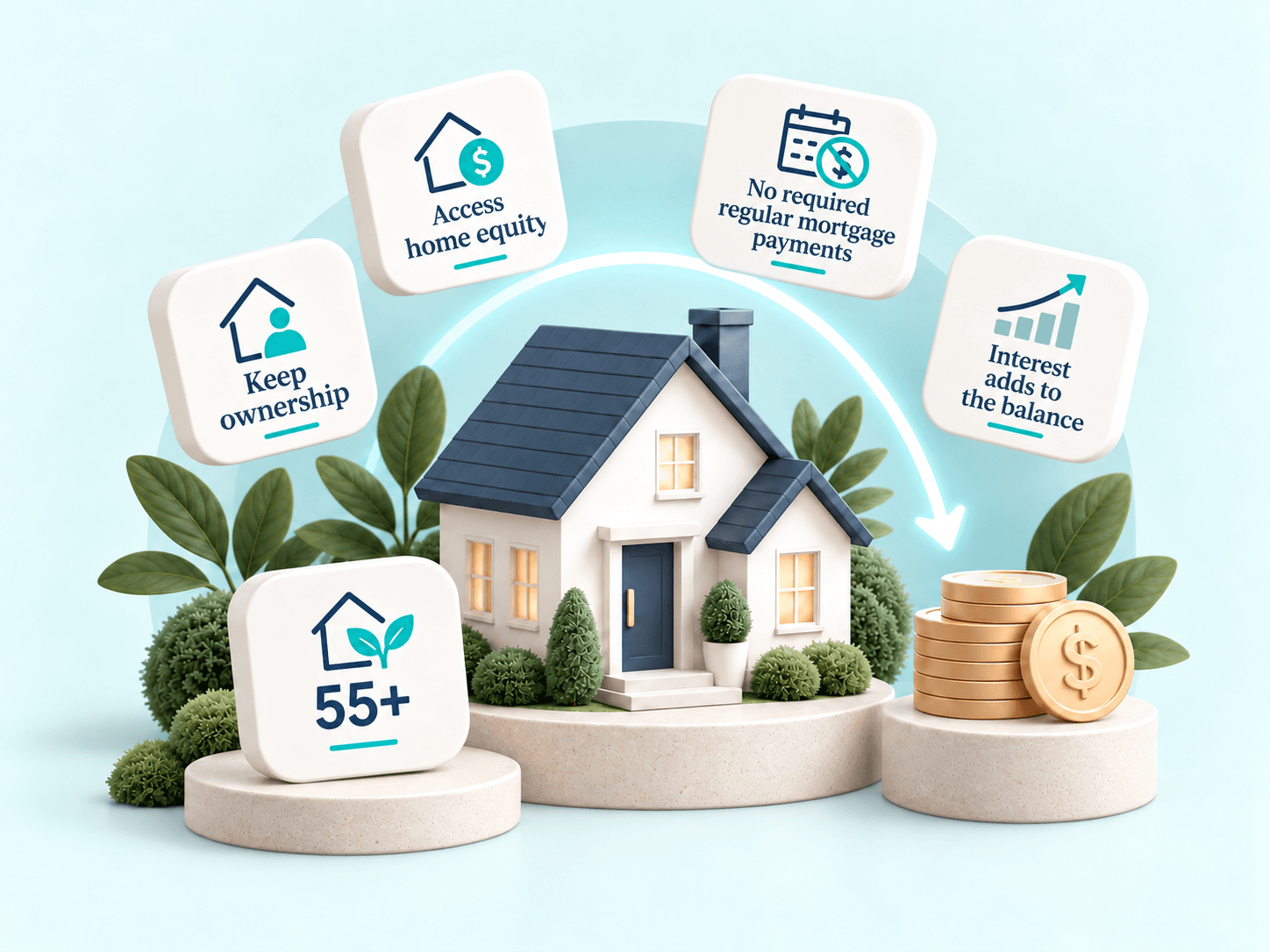
A reverse mortgage lets eligible homeowners 55+ borrow against some of the equity in their home without selling it.
Instead of making regular mortgage payments, interest is added to the mortgage balance. The balance is usually repaid later when the home is sold, the last borrower moves out or dies, or another repayment event in the mortgage agreement occurs.
That different payment structure is one of the main reasons a reverse mortgage can be useful for some homeowners and expensive for others.
You Keep Ownership
A reverse mortgage is registered against your home, but you remain the owner.
You Access Part of Your Equity
The amount available depends on factors such as age, property value, location, and lender guidelines.
Regular Mortgage Payments Aren't Required
You generally don't have to make regular mortgage payments while the reverse mortgage remains in good standing.
Interest Is Added to the Balance
Interest continues to accumulate, so the amount owing can increase over time.
You're borrowing against your home equity, not withdrawing money from a savings account.
The money you receive becomes part of the mortgage balance, and interest is charged on the amount borrowed.
55+ and Still Working
You don't have to be retired to consider a reverse mortgage.
Reverse mortgage eligibility is based on age and property factors, not on whether you've officially retired.
If you're still working, that can actually make the comparison more important. Employment income may give you access to traditional refinancing or a HELOC as well.
A reverse mortgage may still fit, but it shouldn't be chosen simply because you've reached age 55.
Still earning employment income?
Conventional mortgage qualification may still give you lower-cost borrowing options worth comparing first.
Income qualification getting harder?
A reverse mortgage is assessed differently from a conventional mortgage and may remain an option when traditional qualification becomes more difficult.
How Much May Be Available
Your home's equity is only part of the calculation.
Canadian reverse mortgages usually provide access to only a portion of the home's value. The amount available depends on the borrower, the property, and the lender's current guidelines.
Your Age
Age is one of the factors lenders use when determining how much may be available.
Your Home's Value
The lender will use an accepted property value, often supported by an appraisal.
Property Location
Reverse mortgage lending areas and available amounts can vary by location.
Existing Secured Debt
An existing mortgage or HELOC may need to be repaid from the reverse mortgage proceeds.
A Useful Rule of Thumb
Reverse mortgages in Canada usually allow borrowing up to about 55% of the home's value.
That's a maximum, not a starting point or guarantee. The actual amount may be lower, and some lender products have different limits.
How the Money May Be Used
The important question is what you want the equity to accomplish.
Reverse mortgage proceeds generally aren't restricted to one purpose. The reason for borrowing still matters because it affects whether the long-term cost makes sense.
Pay Off Debt
Mortgage proceeds may be used to repay credit cards, loans, or other debts.
Renovate or Repair the Home
Funds may help with repairs, accessibility changes, or improvements that make staying at home easier.
Create More Cash Flow
Some homeowners use their equity to reduce monthly debt obligations or supplement available cash.
Help Family
Homeowners may choose to help children or grandchildren with a down payment, education, or another major expense.
Cover Larger Expenses
The funds may be used for unexpected costs, healthcare expenses, or other financial priorities.
What Happens to Your Equity
The mortgage balance can grow even when you aren't making payments.
Interest is added to the amount owing on a reverse mortgage. That means the mortgage balance generally increases over time.
Your home's value may also change, so nobody can know exactly how much equity will remain years from now.
That's why the amount borrowed, how the money is advanced, the interest rate, and how long you expect to keep the mortgage all matter.
Home Equity
Your home has value beyond what you still owe.
Borrowed Funds
Part of that equity is converted into mortgage proceeds.
Growing Mortgage Balance
The amount borrowed, plus accumulated interest, makes up the balance eventually repaid.
No monthly mortgage payment doesn't mean no borrowing cost.
The trade-off for not making regular mortgage payments is that interest is generally added to the balance instead.
Costs and Considerations
The monthly payment may disappear, but the cost of borrowing doesn't.
A reverse mortgage should be evaluated on its total cost, not only on the fact that regular mortgage payments aren't required.
Interest Rate
Reverse mortgage rates are generally higher than traditional mortgage or HELOC rates.
Property Valuation
An appraisal or other accepted valuation may be required to confirm the property's value.
Legal Advice
Independent legal advice may be required as part of the reverse mortgage process.
Setup and Closing Costs
Lender setup fees, legal costs, and other closing expenses may apply depending on the product.
Early Repayment Costs
Prepayment charges may apply if the mortgage is repaid earlier than allowed under the lender's terms.
What Happens Later
A reverse mortgage isn't meant to stay unpaid forever.
Repayment is generally triggered by certain events rather than by a regular monthly payment schedule.
You Sell the Home
The reverse mortgage balance is repaid from the sale proceeds.
The Last Borrower Moves Out
Leaving the home as a principal residence can trigger repayment under the mortgage terms.
The Last Borrower Dies
The estate generally has a limited period to repay the reverse mortgage according to the lender's terms.
The Mortgage Goes Into Default
Failing to meet the mortgage obligations can make the balance due.
Spouses, Family and the Estate
These questions usually involve more than one person.
Reverse mortgages can affect a spouse, future estate plans, and the amount of home equity eventually left to beneficiaries.
Who's on Title Matters
Lenders consider the ages and circumstances of the homeowners registered on title. Individual lender requirements should be confirmed before assuming how a spouse will be treated.
Adult Children Often Have Questions
Family members may want to understand how the balance grows, whether the home can still be sold, and what may remain for the estate later.
The Estate Eventually Repays the Balance
When the last borrower dies, the estate generally has a set period under the lender's terms to repay the mortgage. Remaining equity belongs to the homeowner or estate after the debt and selling costs are dealt with.
Family conversations can be useful, but the decision still belongs to the homeowner.
Understanding the effect on future equity and the estate helps everyone discuss the same facts rather than assumptions.
Compare Before You Decide
A reverse mortgage isn't your only way to access equity.
Being eligible for a reverse mortgage doesn't automatically make it the best fit. Other options may cost less or work better depending on your income and plans.
Mortgage Refinance
If you can qualify conventionally, refinancing may offer a lower borrowing cost while still allowing access to home equity.
HELOC
A home equity line of credit may suit someone who wants flexible access to funds and can manage the required payments.
Second or Alternative Mortgage
Other equity-based lending may be worth comparing when a traditional lender doesn't fit but a reverse mortgage isn't the preferred structure.
A Simple Example
Sometimes the real question is what you need the mortgage to change.
Two homeowners with similar equity can make very different choices. What matters is what you're trying to accomplish now, what you can comfortably pay each month, and what the borrowing may cost over time.
Example homeowner
Age 67 and retired
Home value
$850,000
Mortgage balance
$110,000
Monthly payment
$1,250
What they want to accomplish
They'd like about $60,000 for renovations and would also like to eliminate the required monthly mortgage payment.
Traditional Refinance
A refinance may offer a lower borrowing cost, but the homeowner would still need to qualify and continue making regular mortgage payments.
Reverse Mortgage
If enough proceeds are available, a reverse mortgage could repay the existing mortgage and provide renovation funds without requiring regular mortgage payments.
The trade-off is that the reverse mortgage will generally cost more to borrow, and the balance can grow as interest accumulates.
Example only. Actual qualification, available proceeds, rates, fees, and repayment terms depend on the lender, borrower, and property.
Keep Exploring
Compare the reverse mortgage with the rest of the picture.
These pages can help you look at the alternatives, costs, and mortgage basics before deciding what fits.
Mortgage Solution
Mortgage Refinancing
Compare traditional refinancing when you want to access equity and can qualify using regular mortgage guidelines.
Explore RefinancingMortgage Basics
Understand the Mortgage Fundamentals
Review the basics behind mortgage terms, borrowing costs, qualification, and other core mortgage concepts.
Explore Mortgage BasicsMortgage Tools
Mortgage Calculators
Use the mortgage tools to explore payments and other numbers that may help with your planning.
Explore the ToolsMortgage Solutions
Explore Your Mortgage Options
Start with the situation you're trying to solve and explore the mortgage solutions available across the site.
View Mortgage SolutionsCommon Questions
Reverse mortgage questions
Clear answers to some of the questions homeowners and their families ask most often.
Reverse mortgages in Canada are generally available to homeowners aged 55 or older. The ages of the homeowners on title can also affect eligibility and the amount available.
A Note From Kiersten
A reverse mortgage should solve something, not simply unlock money.
If you're considering one, tell me what you're trying to change. We can look at the reverse mortgage alongside any other options you may have and see what the numbers actually mean for you.