Start before the renewal notice arrives
Beginning the conversation early gives us time to review your options properly, rather than making a rushed decision close to your renewal date.
Mortgage Renewal Guide
Renewing your mortgage is an opportunity to review your rate, payment, term, features, and whether your current lender still makes sense. This guide will help you understand the choices available before you decide on your next term.
Begin with your lender's renewal offer, then compare it with the other options available to you.
Explore Mortgage Renewals
Your renewal is more than a form to sign. Explore the choices, timing, and questions that can help you find the right mortgage for your next term.
Learn what your lender's offer includes and why it may not be your only option.
Understand when to review your mortgage and why starting early can give you more choices.
Look beyond the rate and compare features, flexibility, costs, and long-term fit.
Learn what is involved in moving your mortgage and when switching lenders may make sense.
Learn which common renewal decisions may reduce your flexibility or leave better options unexplored.
Not sure where to begin?
Begin with your lender's renewal offer, then compare it with the other options available to you.
Mortgage Renewals
It is a chance to pause, review what has changed, and make sure your mortgage still fits your life.
Your current lender will usually send you a renewal offer, but that does not automatically mean it is your best option. Before you sign, it is worth understanding what else may be available and whether your needs are different now.

A good renewal decision is not about chasing every rate.
It is about choosing the mortgage that makes sense for where you are now and where you are going next.
Beginning the conversation early gives us time to review your options properly, rather than making a rushed decision close to your renewal date.
Your payment matters, but so do prepayment privileges, penalties, flexibility, and whether the mortgage still fits your plans.
A renewal can be a useful time to review debts, upcoming expenses, renovations, or changes to your monthly cash flow.
The mortgage that suited you several years ago may not be the best fit today. Renewal is an opportunity to adjust.
Renewal Timeline
Your lender will send a renewal offer, but you do not need to wait until then. Starting early gives you more time to compare options and make a decision that fits your next mortgage term.
6 Months Before
Review your current mortgage, talk through any changes in your plans, and begin exploring what your next term could look like.
4–5 Months Before
Compare lenders, rates, mortgage features, and repayment flexibility while you still have time to consider the alternatives.
2–3 Months Before
Choose the mortgage that fits your goals, your budget, and the way you want the next term to work.
Renewal Day
Finalize the mortgage knowing you took the time to understand your options instead of simply accepting the first offer.
You do not need to wait for the renewal letter to start looking at your options.
Comparing Your Options
A renewal is an opportunity to compare the full mortgage, not just the number in the rate box. The right option should support your payment, plans, and need for flexibility.
Look Beyond the Rate
The rate matters. The mortgage around it matters too.
Cost
The rate affects your payment and overall borrowing cost, but it should be considered alongside the other features of the mortgage.
Structure
The right choice depends on your comfort with payment changes, your plans, and how much certainty or flexibility you prefer.
Repayment
The ability to increase payments or make lump-sum payments can help you reduce your mortgage faster when your budget allows.
Flexibility
Before choosing a mortgage, it is important to understand what may happen if you need to refinance, move, or end the term early.
The Bigger Picture
A lower rate can be valuable, but only when the rest of the mortgage still works for you.
The goal is to understand the trade-offs clearly so you can choose an option that fits both your finances and your future plans.
Renewal Checklist
Looking at each part of the mortgage can help you understand whether an offer provides genuine value, not simply an attractive rate.
How much will the rate affect your payment and total borrowing cost?
Can you make additional payments, increase your payment, or move the mortgage to another home?
What happens if you need to sell, refinance, or change the mortgage before the term ends?
Are there appraisal, legal, discharge, transfer, or registration costs to consider?
Changing Lenders
You are not required to renew with your existing lender. Moving your mortgage may give you access to a better rate, more useful features, or a mortgage that fits your plans more closely.
Switching does involve more than signing a renewal offer, but much of the process can be coordinated for you. The important question is whether the overall benefit makes the move worthwhile.
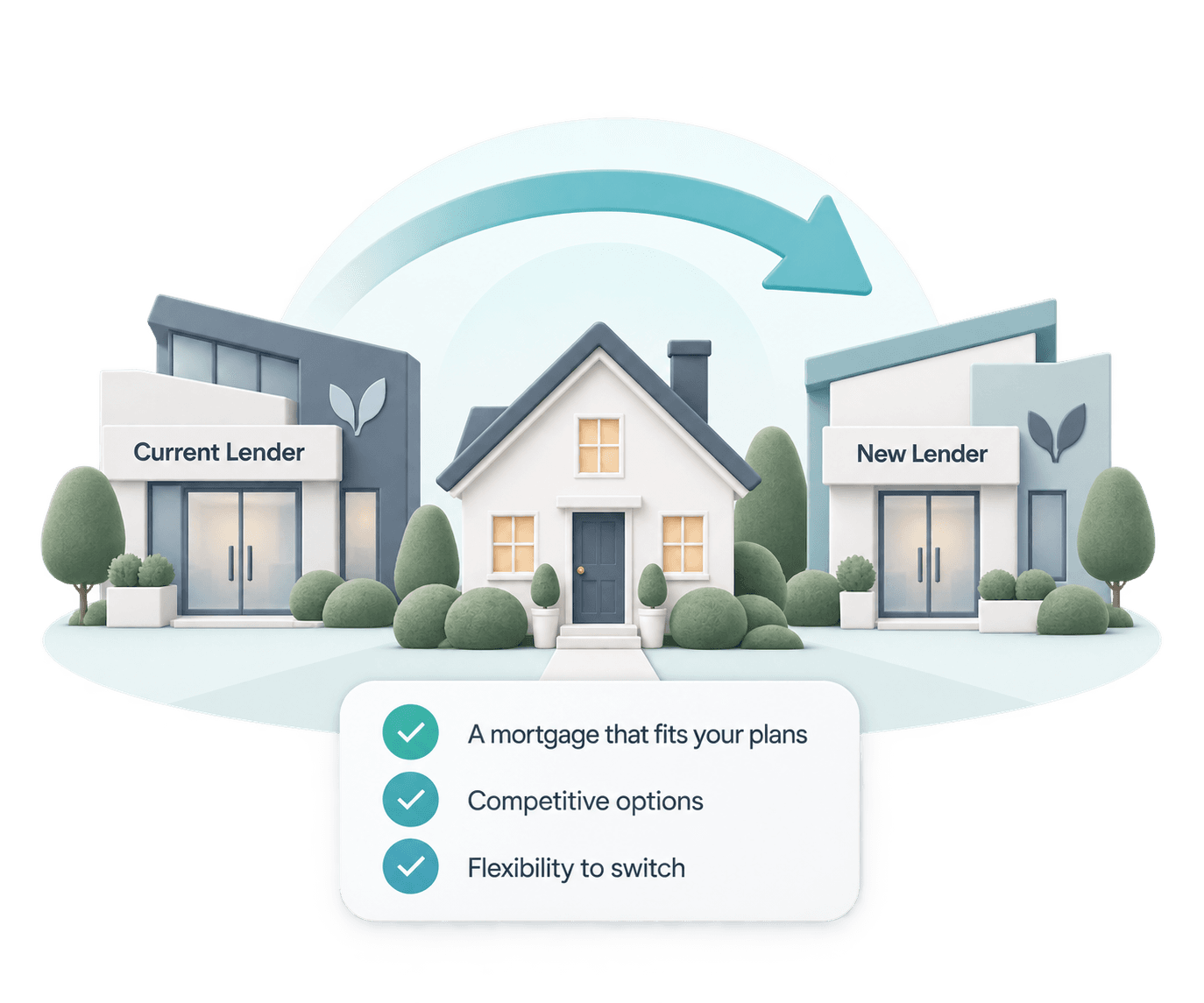
Your current lender is one option, not your only option.
Reviewing the alternatives before renewing can help you make a more informed decision, even when staying with your current lender ultimately makes the most sense.
Step 01
The remaining mortgage balance is paid out by the new lender and your mortgage continues under the new terms you have selected.
Step 02
Unlike signing a simple renewal with your current lender, switching usually requires a new application and updated income, property, and credit information.
Step 03
Legal, appraisal, discharge, or registration costs may apply. In some situations, the new lender may cover part or all of these expenses.
Step 04
A lower rate can help, but the mortgage features, penalties, flexibility, and transfer costs should also be considered before making a decision.
The Bottom Line
Switching lenders only makes sense when the overall mortgage is better for you, not simply because one number looks lower.
Easy Things to Overlook
Most renewal decisions aren't about avoiding mistakes. They're about understanding your options so you can make a confident, informed choice.
A little extra time creates a lot more flexibility.
Starting early gives you more options and more time to ask questions before making a decision.
The lowest rate isn't always the best mortgage.
Features like prepayment privileges, portability, and penalties can matter just as much over the life of your mortgage.
Convenience and confidence aren't always the same thing.
Your lender's renewal offer may be a good option, but it is worth understanding your alternatives before deciding.
Your mortgage should evolve with your life.
Income, family, renovations, retirement plans, or new financial goals may all influence what makes sense today.
There are no silly mortgage questions.
If something doesn't make sense, ask. A good mortgage conversation should leave you feeling more confident, not more confused.
One More Thing
If something about your renewal doesn't make sense, ask before you sign.
A good renewal conversation should help you understand the trade-offs clearly enough to feel comfortable with the decision you're making.
Continue Exploring
Your renewal may lead to questions about refinancing, current rate trends, or the choices available for your next mortgage term.
Mortgage Guide
Explore when refinancing may help reduce payments, consolidate debt, or access your home's equity.
Mortgage Guide
Review fixed and variable rates, open and closed mortgages, term lengths, penalties, portability, and the features that may matter during your next mortgage term.
Mortgage Tool
See the current Bank of Canada rate, 5-year bond yield, fixed-rate pressure, and what those signals may mean for mortgage pricing.
Renewal Questions
Mortgage renewals can look simple on the surface, but the details still matter. Understanding your choices before you sign can help you avoid unnecessary surprises later.
You do not need to know every mortgage rule.
You just need enough information to ask good questions and feel confident about your decision.
Starting four to six months before your renewal date gives you time to review your current mortgage, compare options, gather documents if needed, and make a thoughtful decision without feeling rushed.
A Note from Kiersten
A renewal offer can look simple, but the rate, term, payment, penalties, and features can affect you for years. This is a good time to review what has changed and whether your current mortgage still works the way you need it to.
I can help you review the offer in front of you, compare other lenders and mortgage options, and understand the trade-offs before you decide.